
Whole-house repiping in Roseville, CA
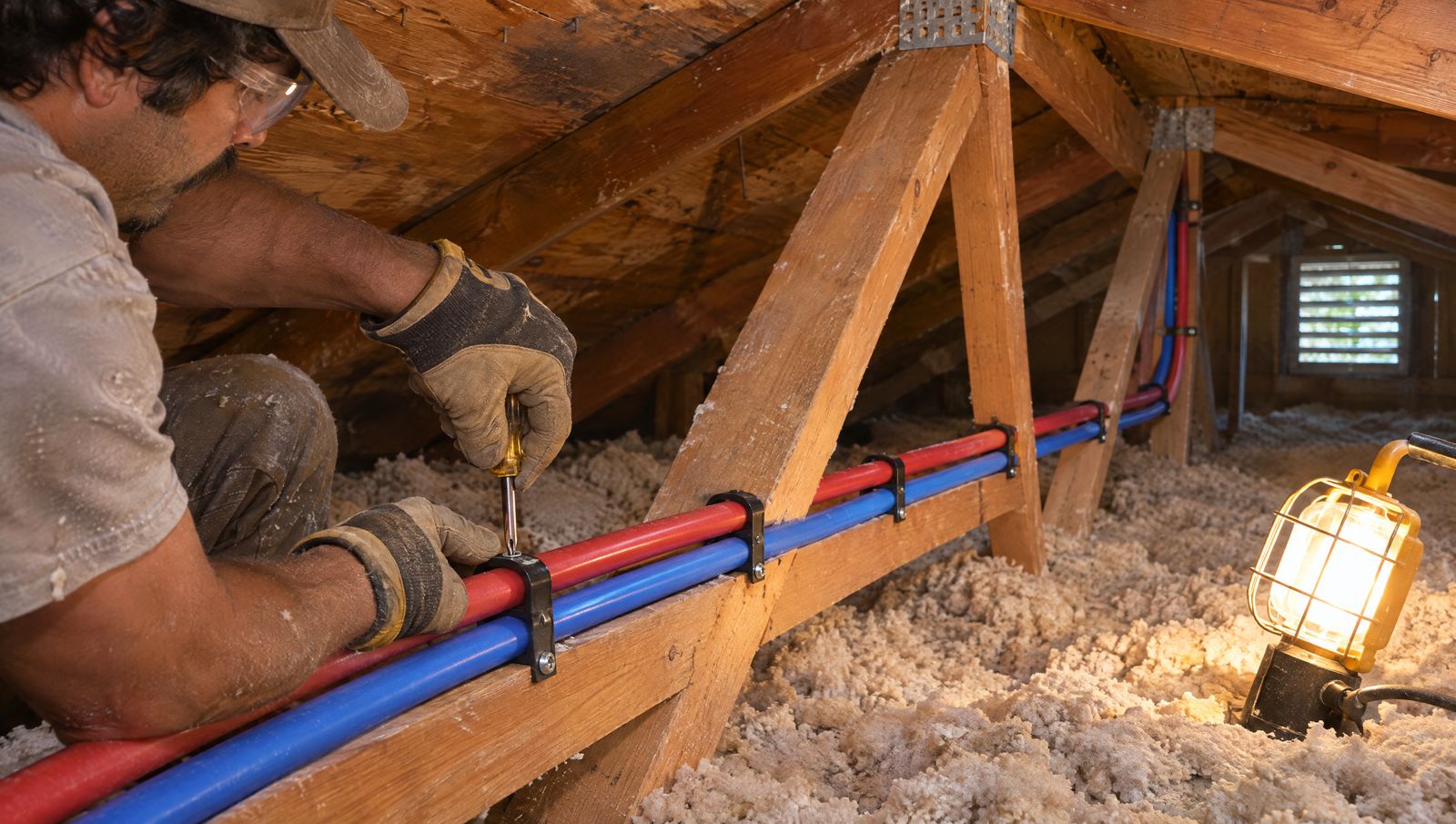
When a house has had one leak after another, when old galvanized pipe gives rusty water and weak flow, or when an inspector flags the pipe, fixing the next leak only buys time. A repipe replaces the water supply lines throughout the house. We usually run the new lines through the attic and down inside the walls, then draw where every one of them goes, so the next person who opens a wall is not guessing.
- New lines through the attic and walls
- A drawn plan of every new line
- Permit pulled, walls patched
Tell us about the leaks so far
We usually answer the same day. Tell us what you have noticed and roughly when the house was built.
Water spraying or a smell of gas? For gas, leave the house and call PG&E or 911 first. For water, shut the main off, then call or text: 916-555-0148
Why we run the new lines overhead
Replacing every old line in place would mean opening walls, floors and sometimes the slab wherever the original plumber ran them. So we usually leave the old lines where they are, shut them off, and run new ones through the attic and down inside the walls to each fixture.
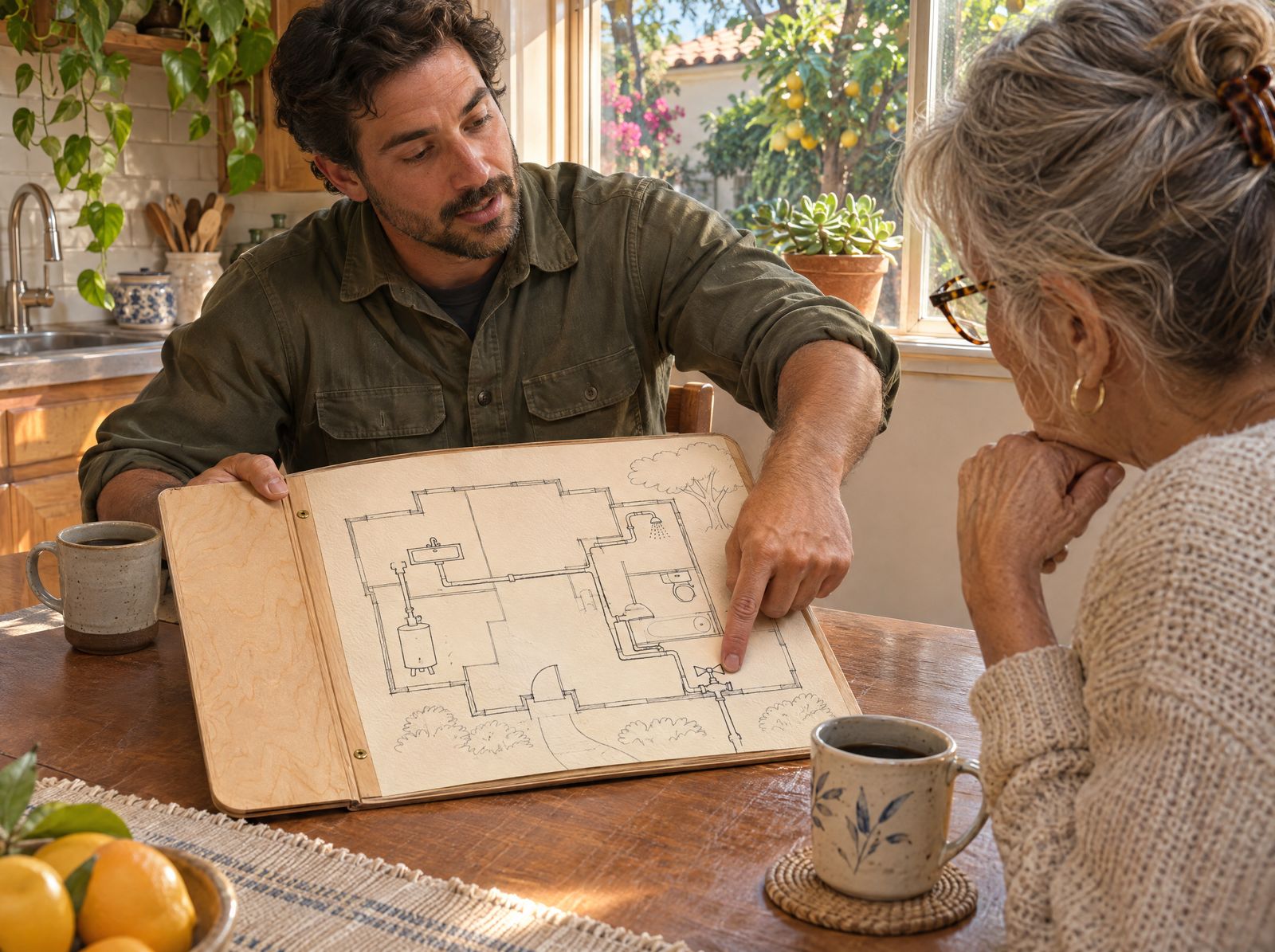
That means a few neat holes in drywall instead of a torn up house. We patch every one. Before we close the last hole, we draw the new route on the plan of your house: which wall each line drops through, where the branches split, where the new shutoffs are. It goes in your folder, so the next person who works on the house knows too.
“Our 1971 house still had its original galvanized lines and the shower upstairs barely ran. Wes walked every room with us, drew where the new PEX would go through the attic, and the crew patched every hole they cut. The map of the new lines is in our kitchen drawer.”
Signs a house is ready for a repipe
One of these is a reason to look closer. Two or three together usually decide it.
Leak after leak
Pinhole leaks in different rooms, or a second and third repair on the same run of pipe within a year or two.
Rust colored water
Brown water when a tap first opens, then clearing, is a common sign of old galvanized steel rusting inside.
Pressure that drops
Weak flow at the far bathroom when another tap is running, or a shower that fades when the washer fills.
A house of a certain age
In Citrus Heights the median home was built in 1977, and 40 percent of homes went up in the 1970s. In Granite Bay the median is 1987.
Who issues the repipe permit
The permit office changes at the city line. We pull it either way.
| Where the house is | Permit office | What we know about it |
|---|---|---|
| Roseville | City of Roseville Building | Residential plumbing permits; some types can be issued online over the counter |
| Citrus Heights | City of Citrus Heights | Water lines, new, replacement or repair, are on the city's list of projects that need a permit |
| Lincoln | City of Lincoln | RePipe is one of the city's online minor permits |
| Rocklin and Folsom | Each city's own building department | We confirm the current rule when we book |
| Granite Bay | Placer County | Granite Bay is unincorporated, so the county issues the permit |
How a repipe goes
Most of the work happens in the attic and inside the walls. The water is off only while we switch over.
Walk the house and draw it.
We trace every existing line, find the main shutoff and mark where each fixture is fed from.
Plan the new route.
You see the new route drawn on the plan, with the price, before anything is cut.
Run the new lines.
Through the attic and down the walls to each fixture, with new shutoffs, then the switch over.
Inspect, patch, hand over.
The inspector signs off, we patch the drywall, and the finished plan goes in your folder.
You deal with Wes, and you see the new route before the quote
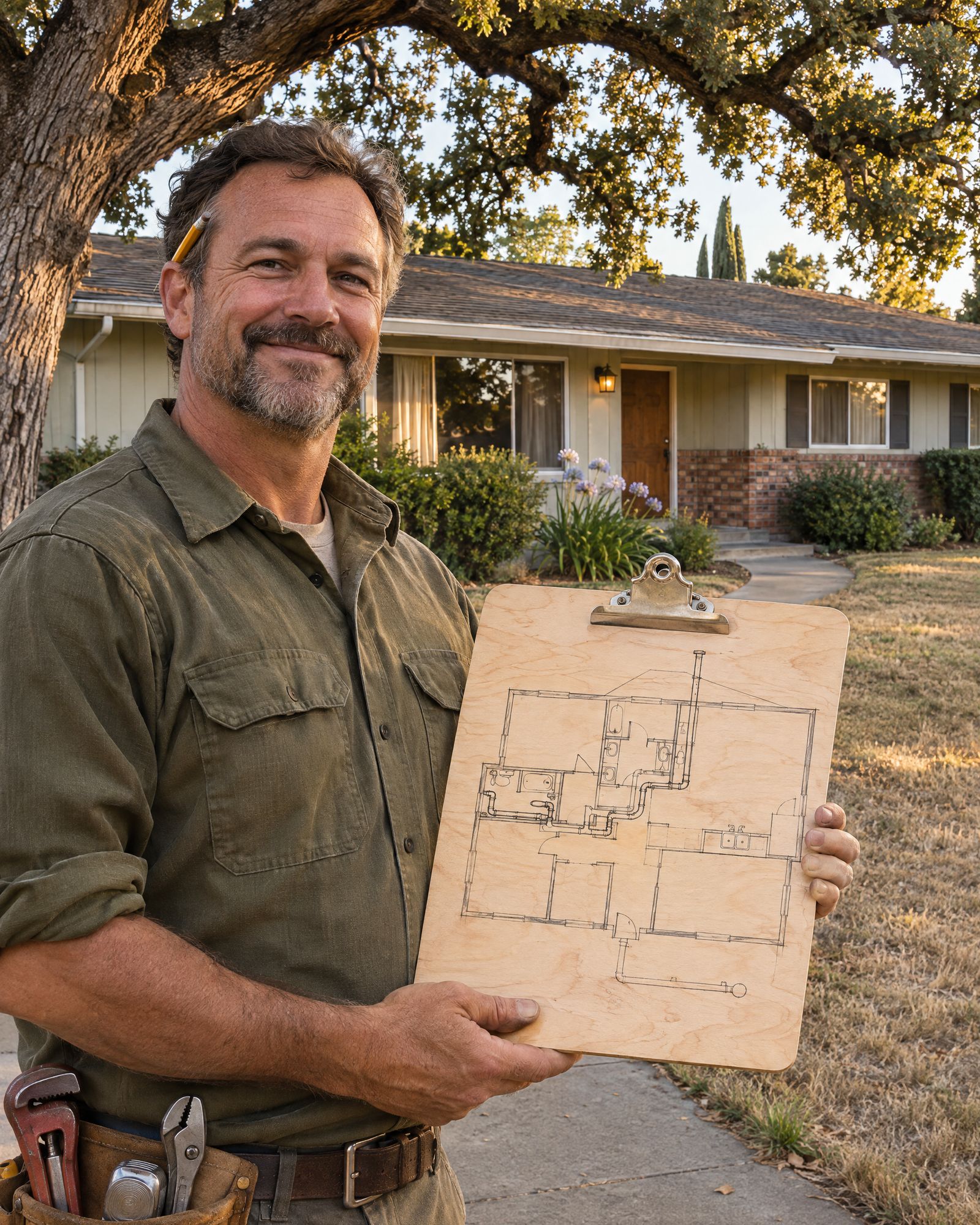
Wes Lindqvist, owner and licensed plumbing contractor
Wes walks the house with you, draws the map as he goes and writes the price before any work starts. You deal with him from the first call to the folder in your kitchen drawer.
Book a repipe visit
We usually answer the same day. Tell us what you have noticed and roughly when the house was built.
Water spraying or a smell of gas? For gas, leave the house and call PG&E or 911 first. For water, shut the main off, then call or text: 916-555-0148
Repiping questions we hear most
How do I know it is time to repipe rather than repair?
When leaks keep coming in different places, when the same kind of pipe fails twice, when old galvanized lines give brown water first thing in the morning and the flow keeps dropping, or when an inspection flags the pipe. One leak is usually a repair. A third is usually a pattern. We tell you which we think it is, in writing. See leak detection and repair.
PEX or copper?
Both are used for whole-house repipes. PEX is flexible, so it bends round framing with fewer joints and goes in faster through an attic. Copper is rigid and needs more joints. We price both if you want to compare and explain what each means for your walls and your schedule.
Do I have polybutylene or galvanized pipe?
Maybe, depending on when the house was built and whether it has been repiped since. Polybutylene is usually gray, flexible plastic, often joined with crimp rings at the fittings. Galvanized steel is gray metal with threaded joints and tends to rust from the inside. Send us a photo of the pipe at the water heater or under a sink and we will tell you what it is. We draw what we find either way.
Does a repipe need a permit?
Yes, in the places we work. Citrus Heights lists water lines, new, replacement or repair, among the projects that need a residential permit. Lincoln offers a RePipe permit among its online minor permits. In Roseville, Rocklin and Folsom the city building department issues it, and in Granite Bay, which is unincorporated, Placer County does. We pull it and book the inspection.
Is there lead in my water lines?
The City of Lincoln reports that its service line inventory found no lead or galvanized service lines needing replacement, including customer-owned lines. San Juan Water District, Citrus Heights Water District, Fair Oaks and Orange Vale all completed their inventories in 2025 and found no lead service lines. A repipe replaces the supply lines inside the house, which is where older solder and fittings would be.
Had one leak too many? Tell us about the house.
Roughly when it was built, how many leaks so far and where. If it turns out to be one leak, not a pattern, see leak detection and repair.
Book a plumber who maps it first
We usually answer the same day. Tell us what you have noticed and roughly when the house was built.
Water spraying or a smell of gas? For gas, leave the house and call PG&E or 911 first. For water, shut the main off, then call or text: 916-555-0148