
Leak detection and repair in Roseville, CA
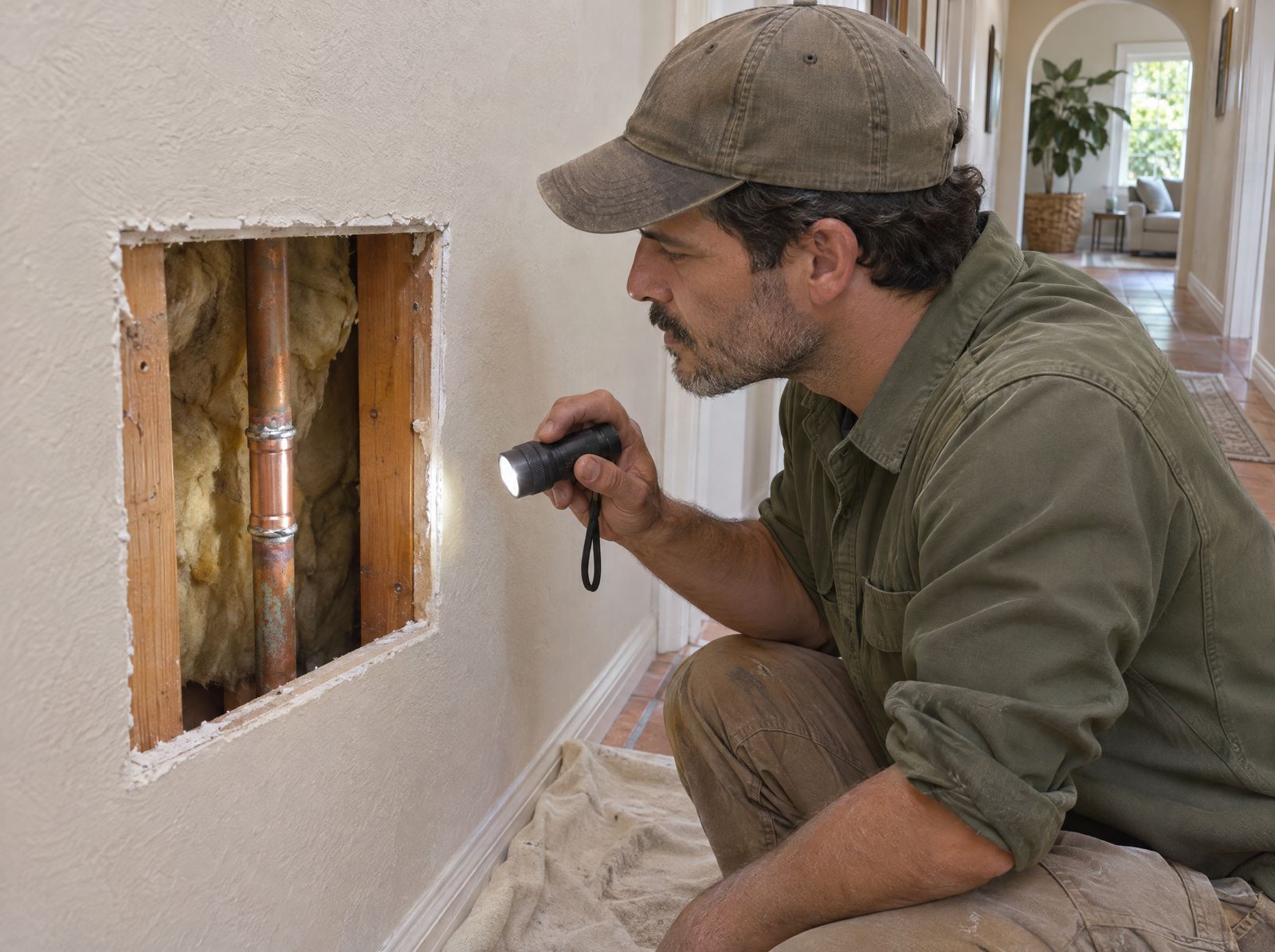
A hidden leak rarely announces itself. You see a higher bill, a meter that turns with every tap off, a stain spreading on drywall or a damp patch of carpet by one wall. We start at the meter at the curb, split the house line by line until we know which run is losing water, mark the spot on a plan of your house, and only then open the wall. One opening, in the right place.
- Meter test first, with you watching
- The leak marked on a plan before we cut
- Repair, reroute or repipe, explained in writing
Tell us what made you suspect a leak
We usually answer the same day. Tell us what you have noticed and roughly when the house was built.
Water spraying or a smell of gas? For gas, leave the house and call PG&E or 911 first. For water, shut the main off, then call or text: 916-555-0148
How we find a leak you cannot see
We walk the line from the curb inward, one test at a time, until we are standing at the leak.
Meter test.
Everything off, eyes on the meter. If water is moving, there is a leak, and we know it before we open anything.
Split the house.
We close valves to tell the hot side from the cold, and the house from the yard and the irrigation.
Narrow it to one run.
Branch by branch, with pressure readings and by listening, until one stretch of pipe is left.
Mark it, then quote.
The spot goes on a plan of your house, with a written price for each way to fix it.
Why water lines leak inside the walls
Pipe wears out where it rubs against framing, at joints, at bends where water runs fast, and where the original work was rushed. Copper can develop pinholes. Old galvanized steel rusts from the inside. Fittings on plastic lines can fail. Most leaks start small and stay hidden until the drywall stains or the bill climbs.
The houses here span every era. In Granite Bay the median home was built in 1987; in Citrus Heights, 1977; in Lincoln, 2005. That mix is why we do not assume a pipe type from a ZIP code. We look, we draw what we find, and we tell you plainly whether the rest of the line is likely to follow.
“The meter kept turning with every tap off and nothing looked wet. Wes split the house into hot and cold, then branch by branch, and found one line behind the hallway wall. One opening, one repair, and a drawing of where it was.”
Spot repair, reroute or repipe
Three ways to deal with a leaking line. Which one fits depends on the house, the pipe and how many leaks it has had.
| Fix | What happens | Usually fits when |
|---|---|---|
| Spot repair | We open the wall over the leak, repair the pipe and patch it | It is the first leak and the rest of the line looks sound |
| Reroute | The leaking run is shut off and a new one runs through the attic or another wall | The leak is behind cabinets, tile or a finished floor you want to keep |
| Repipe | Every supply line in the house is replaced | The house has had several leaks or the pipe is past saving |
What a hidden leak usually looks like first
None of these prove a leak on their own. Each one is a reason for a meter test.
A bill that climbs
Same household, same habits, more water. The meter is counting something you are not using.
A stain that spreads
A yellow ring on drywall or a ceiling, or paint that bubbles in one place.
Running water with nothing on
A faint hiss in a quiet house at night, often near a wall or a bathroom.
Damp in one place
Carpet that stays damp, a baseboard that swells, a musty corner with no other cause.
Irrigation that never stops
Not a house leak, but it moves the meter the same way. We rule it out at the valve box.
You deal with Wes, and you see the leak on the plan before the quote
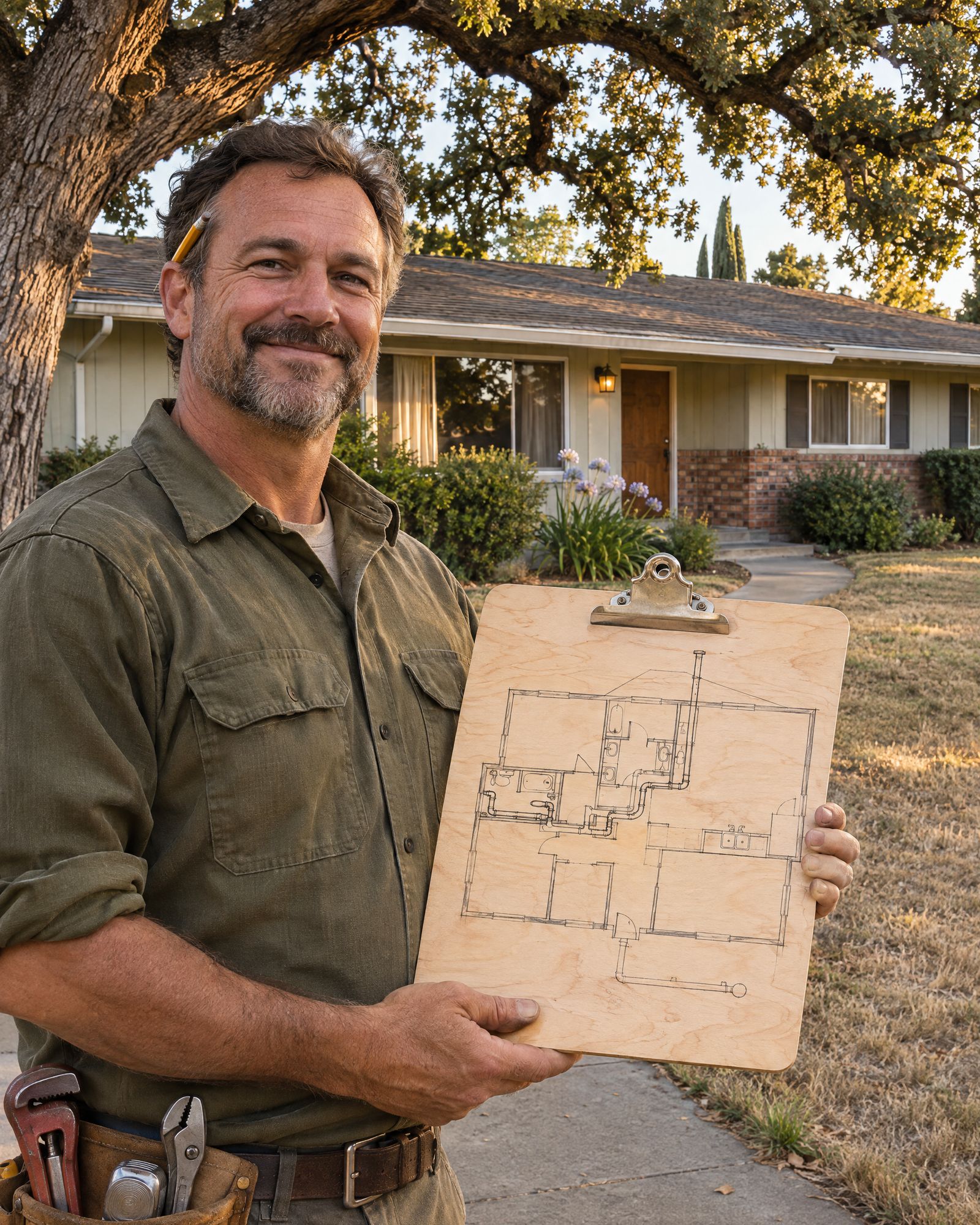
Wes Lindqvist, owner and licensed plumbing contractor
Wes walks the house with you, draws the map as he goes and writes the price before any work starts. You deal with him from the first call to the folder in your kitchen drawer.
Book a leak test
We usually answer the same day. Tell us what you have noticed and roughly when the house was built.
Water spraying or a smell of gas? For gas, leave the house and call PG&E or 911 first. For water, shut the main off, then call or text: 916-555-0148
Leak questions we hear most
How do I check for a leak myself?
Find the water meter, usually in a box near the curb. Turn off every faucet, the ice maker, the irrigation and anything else that uses water, then watch the meter for a while. If its leak indicator or sweep hand moves, water is leaving the line somewhere. Note the reading, wait an hour without using water, and check again. A change is a reason to call.
What are pinhole leaks, and are they common here?
A pinhole leak is a tiny hole worn through the wall of a copper pipe, often first seen as a damp spot or a fine spray inside a wall. In 2020 Folsom saw a wave of them in homes, and a study for the city said the cause may be the water's purity combined with a pH above 9 and the use of chlorine. Folsom began adding orthophosphate on October 8, 2020 to form a protective film inside copper pipes. One pinhole is a repair; several usually point to a repipe.
Do you have to open a lot of walls?
No. That is the point of finding it first. We narrow the leak down by closing valves to separate the hot side from the cold, the house from the yard, and one branch from the next. When we know which run is leaking and roughly where, we open one neat hole, repair the pipe and patch it. The spot is marked on your house plan.
Is the leak mine or the water utility's?
If the meter box itself is leaking, or water is coming up at the curb before the meter, call your water utility first. Roseville, Placer County Water Agency, San Juan Water District, Citrus Heights Water District, Lincoln and Folsom each run their own system. On the house side of the meter, the line and everything inside is yours, and a plumber does the repair.
Could hard water be causing my leaks?
Unlikely, for most homes here. Water from Folsom Lake is soft: Roseville's lake water averaged 26 ppm total hardness in its 2025 report, and San Juan Water District's 17 ppm. Well water is harder where it blends in. Leaks have many causes, and we tell you what we see on the pipe we cut out.
Think water is going somewhere? Tell us what you noticed.
The bill, the meter, a stain, a sound. If the meter test points to a leak, we follow it from there. If the house has had several leaks, see repiping.
Book a plumber who maps it first
We usually answer the same day. Tell us what you have noticed and roughly when the house was built.
Water spraying or a smell of gas? For gas, leave the house and call PG&E or 911 first. For water, shut the main off, then call or text: 916-555-0148