
Drain cleaning in Roseville, CA
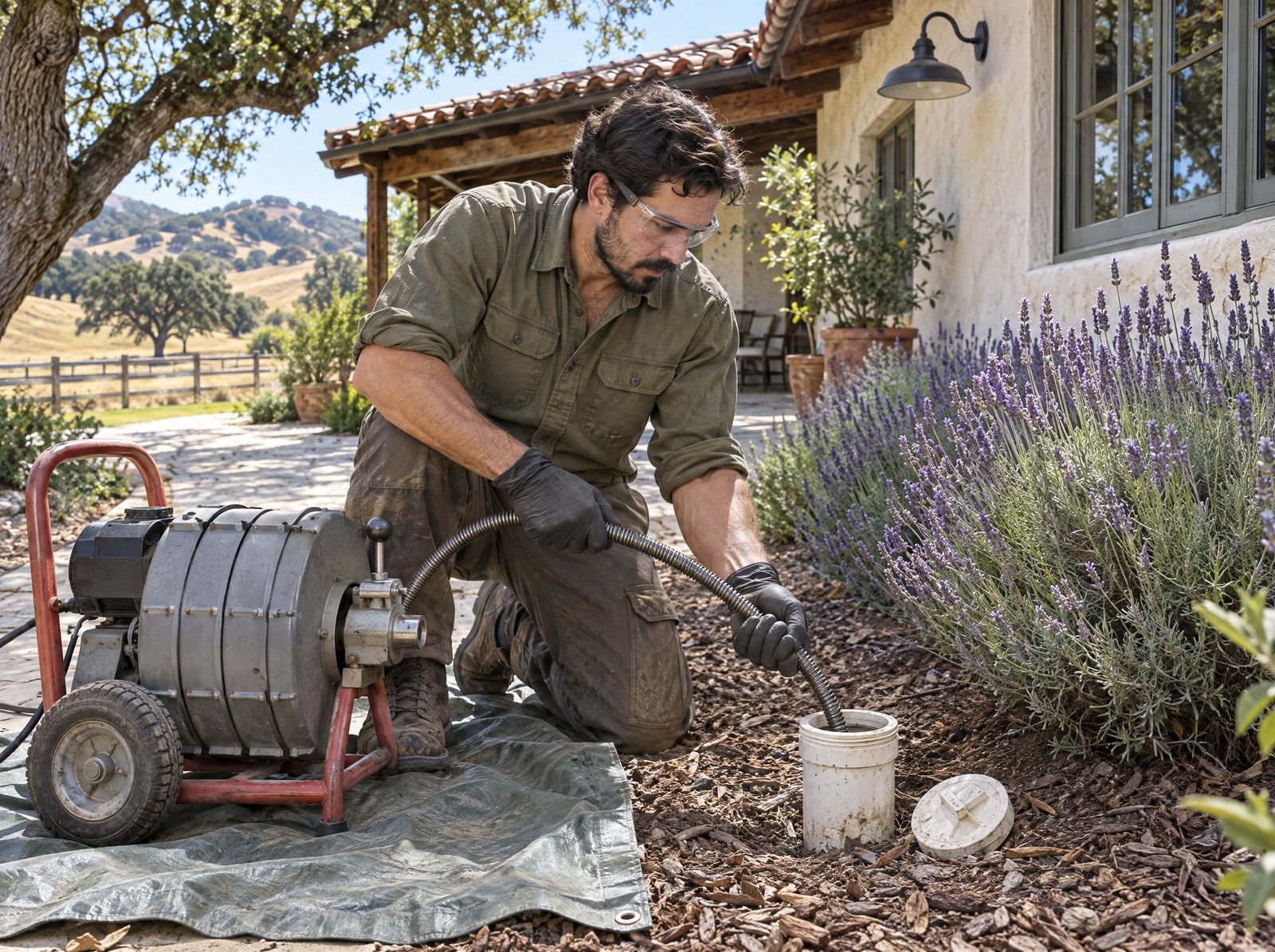
One slow sink is a branch drain. Every drain backing up at once, or a toilet that gurgles when the washer empties, is the main line. We find the cleanout, clear the line from there, and run a camera through it so you see what caused the blockage, not just that it is gone. Every cleanout we find goes on your house map, so the next time nobody has to dig for it.
- Cleared from the cleanout, not through the toilet
- Camera footage after we clear it
- Every cleanout marked on your map
Tell us which drains are slow
We usually answer the same day. Tell us what you have noticed and roughly when the house was built.
Water spraying or a smell of gas? For gas, leave the house and call PG&E or 911 first. For water, shut the main off, then call or text: 916-555-0148
Which drain is it?
Where the water backs up tells us where to start.
One slow sink
Usually hair, soap or grease in that fixture's branch. A short, local clearing.
A slow tub and toilet together
Often the branch they share, or the main line starting to close up.
Everything at once
The main line. We clear it from the cleanout and look inside with a camera.
Gurgling when the washer drains
A large rush of water with nowhere to go. The main is partly blocked.
Why we run a camera after we clear it
Clearing a main line is half the job. The other half is knowing why it blocked. After we clear it, we push a camera down the line from the cleanout and watch the whole run out toward the street. Roots at a joint, a sag that holds water, a crack or a section of old pipe that has given up all show up plainly.
You watch with us. If the line is sound, you know you are done. If it is not, we draw where the problem sits on the plan of your house, with the cleanout and the distance from it, so a repair can start in the right place.
How we clear a main line
The same four legs every time, so nothing is guessed.
Find the cleanout.
Usually by the foundation, sometimes near the property line as well. We mark both on your map.
Clear the line.
A cable machine from the cleanout, sized to the pipe, until water runs freely.
Run the camera.
The whole run, from the cleanout toward the street, with you watching.
Tell you what we saw.
A sound line, a fix to plan for, or a repair to make now, written down with the price.
What we pull out of drains most often
Most blockages come from a short list. Keeping these out of the drains saves a visit.
| What | Where it ends up | What to do instead |
|---|---|---|
| Cooking grease and fat | Coats the main line and hardens | Let it cool, scrape it into the trash |
| Wipes, even ones sold as flushable | Catch at joints and in sags | Bin them |
| Hair and soap | Bath and shower branches | A strainer over the drain |
| Roots | Joints in older lines outside | A camera look, then a repair if needed |
You deal with Wes, and you watch the camera with us
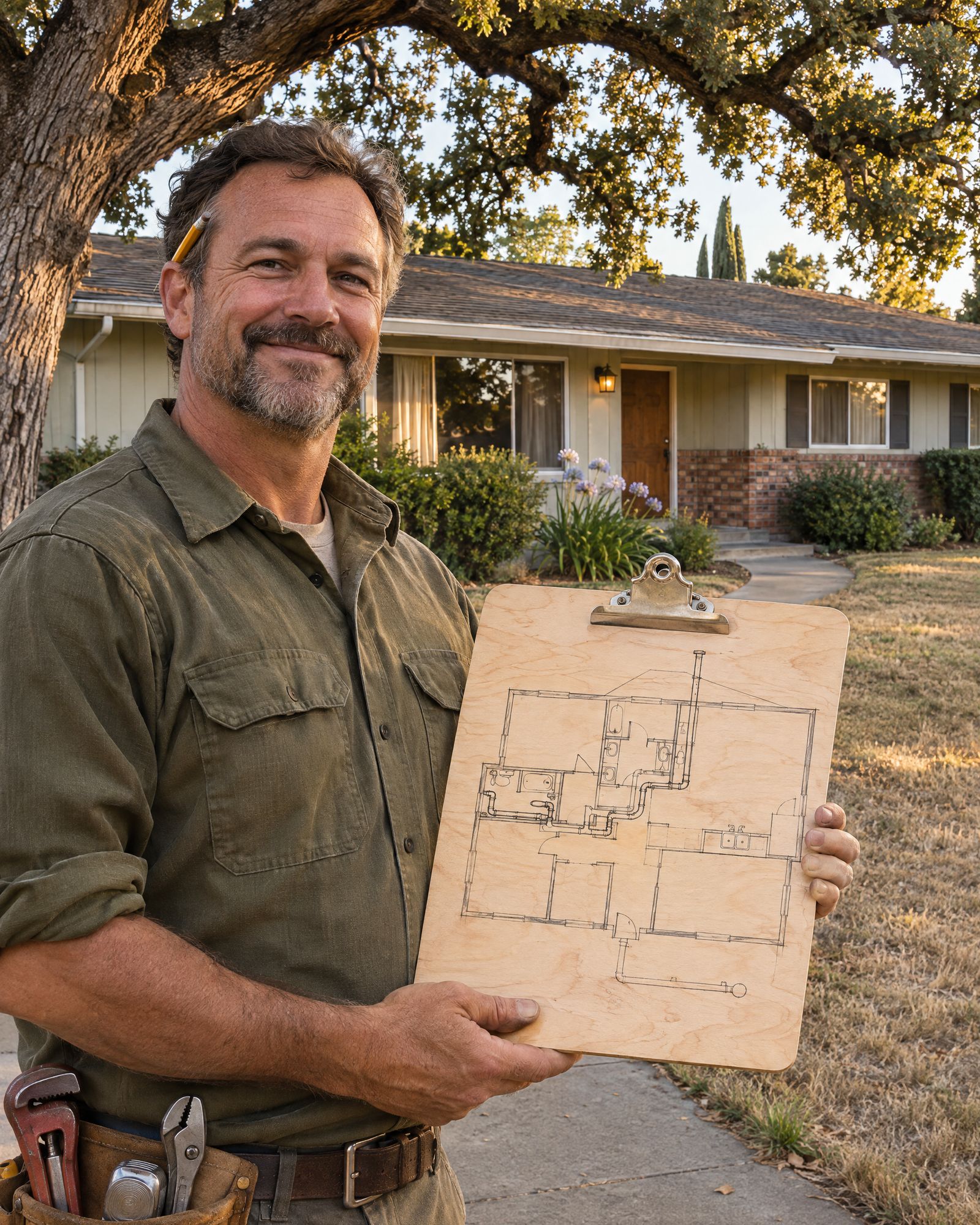
Wes Lindqvist, owner and licensed plumbing contractor
Wes walks the house with you, draws the map as he goes and writes the price before any work starts. You deal with him from the first call to the folder in your kitchen drawer.
Book a drain cleaning
We usually answer the same day. Tell us what you have noticed and roughly when the house was built.
Water spraying or a smell of gas? For gas, leave the house and call PG&E or 911 first. For water, shut the main off, then call or text: 916-555-0148
Drain questions we hear most
Who should I call first when the sewer backs up?
Roseville asks residents to call the city first, because the city maintains the sewer mains and service connections and will check whether the problem is on its side. In Rocklin, Loomis and part of Granite Bay, South Placer Municipal Utility District asks the same, 24 hours a day, at (916) 786-8555. If the district's side is clear, the blockage is in your private line and we come out.
How do I tell if it is the main line?
If more than one fixture is slow or backing up, especially the lowest ones, like a shower or a ground floor toilet, it is usually the main. A toilet that gurgles or water that rises in the shower when the washer drains points the same way. One slow sink on its own is usually just that sink's branch.
In Lincoln, how do I know whose side the blockage is on?
The City of Lincoln's advice is to check the sewer cleanout at the property line. If that cleanout is not backing up, the blockage is in your private sewer line and you need a plumber. If it is full, call the city. See plumbing in Lincoln.
Why run a camera after clearing the drain?
Because a cable clears the blockage but does not tell you why it happened. The camera shows whether it was a grease build up, roots at a joint, a sag that holds water or a cracked pipe. If the line is sound, you know. If it is not, you see it before anyone talks about sewer line repair.
My house does not seem to have a cleanout. Now what?
Most do, often under a bush or a layer of bark. We look for it first. If there truly is none, we can clear the line through another opening and talk about adding a cleanout, which makes every future clearing easier. Wherever it is, it goes on your map.
Drains backing up? Tell us which ones.
Which fixtures are slow and since when. If sewage is coming up, stop running water in the house and call or text. If it keeps coming back, see sewer line repair.
Book a plumber who maps it first
We usually answer the same day. Tell us what you have noticed and roughly when the house was built.
Water spraying or a smell of gas? For gas, leave the house and call PG&E or 911 first. For water, shut the main off, then call or text: 916-555-0148